Blown-In vs. Batt Insulation: Which Is Better for a White Mountains Home?
Both blown-in and batt insulation work — the right choice depends on your attic's framing, what's already up there, and how much disruption you're willing to accept. Here's how the decision actually plays out for a White Mountains home.
Blown-In: Best for Irregular Spaces and Topping Up
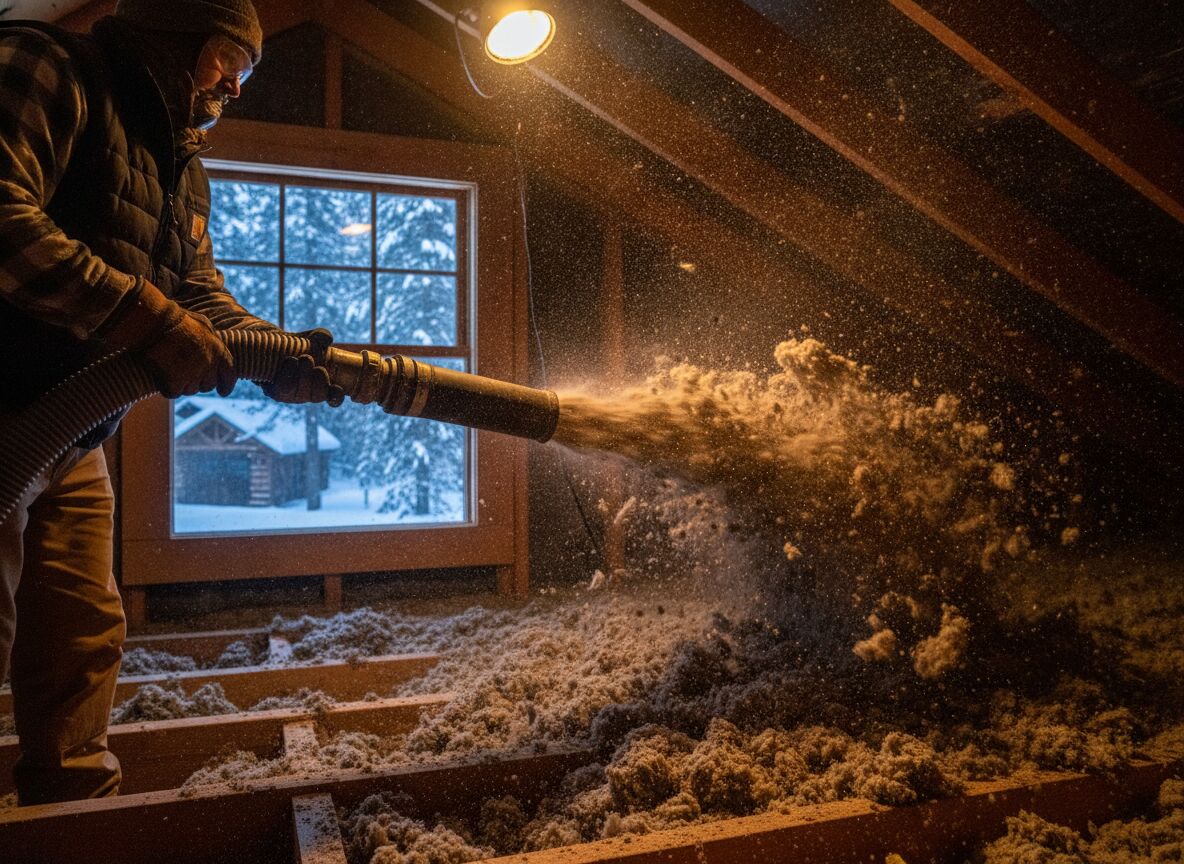
Blown-in insulation flows around obstructions, wiring, and irregular framing — which matters in older White Mountains homes and cabins that weren't built to a standard modern framing spec. It's also the faster option for topping up existing attic insulation that's fallen below its original R-value.
Batt: Best for Open, Regularly-Framed Spaces
Batt insulation performs best in open wall cavities, floors over crawl spaces, and new-construction framing where consistent coverage across an evenly-spaced structure matters more than filling gaps.
What This Means at Our Elevation
Because homes at 6,500+ feet generally need a higher target R-value than lower-elevation or desert-AZ recommendations, the material choice matters less than making sure the total depth and coverage actually hits that target — a thin layer of either material won't perform the way a national buying guide might suggest.
Can You Mix Both?
Yes — many homes use batt in open wall cavities and blown-in for the attic, since each performs best in a different part of the structure. We'll walk through what makes sense for your specific home during a free on-site estimate.
Pinetop Insulation installs both blown-in and batt insulation across the White Mountains — reach out for a free, no-obligation assessment of your attic or walls.
Ready to lower your winter heating bills?
Free, no-obligation estimate — built for real White Mountains winters.